How Many Taps Does Your Bar Really Need?

The number of beer taps can seem like a simple decision when you are planning a bar.  In reality, it is not. More taps can mean more variety for customers, but it can also create problems. More taps can mean higher equipment costs, more maintenance, and the risk of slow-moving kegs. You also have the practical side of your setup, including beverage equipment installation and service. So, when it comes to deciding the number of beer taps, ask yourself: how many taps does your bar really need?

How Many Taps Does Your Bar Really Need?

The answer doesn’t depend on having the biggest selection possible, but on matching your draft system to your customers, menu, and expected beer sales. Different things need to be considered.

Start with Your Beer Selection

A small neighborhood bar may only need a few taps, while a craft beer or taproom may require many more. As a general guide, 1-4 taps can work for a small or starter bar, 5-6 for a medium selection, and 7-10 for a bigger or busier operation. Actual requirements vary by business, so these are practical ranges, not industry mandates.

Consider the types of beer you want to serve. A basic bar may dedicate taps to popular choices such as lager, pale ale, IPA, and stout. If your business focuses on craft, you may want to have additional taps for seasonal beers, local breweries, sour ales, wheat beers, or specialty releases.

However, make sure each additional tap serves a purpose, because each one adds a keg, beer line, faucet, and connection to manage.

Do Not Install Taps Just for Show

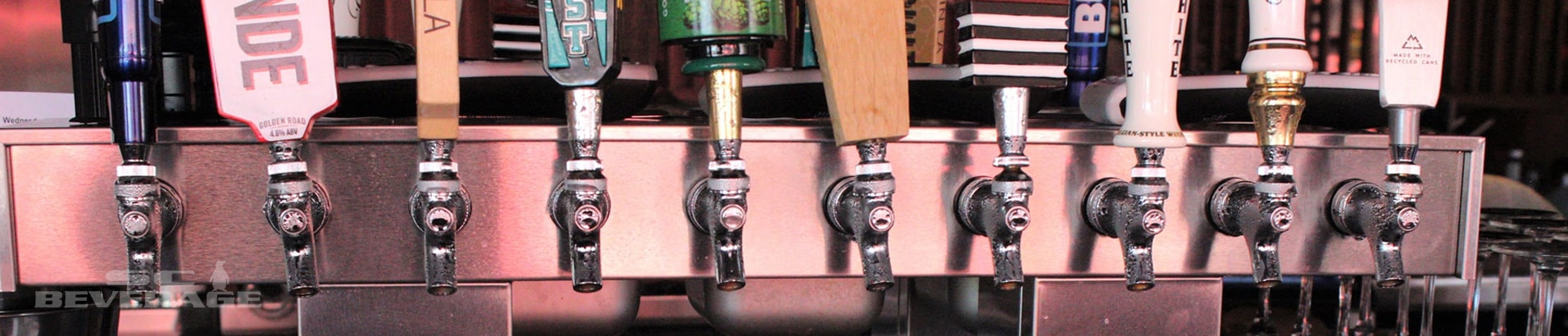
Although a long row of shiny faucets may look impressive, unused taps can become an expensive feature rather than a business advantage.

It is hard to keep a beer tasting fresh if it does not sell as fast as it should. It can also tie up inventory. Therefore, consider your actual sales volume rather than simply how many beers you want to offer.

Look at your daily and weekly beer sales, as well as the popularity of different styles. If you already have a historical data, use that. If you are opening a new bar, be conservative in your planning. That is wiser than immediately investing in a large draft system.

Think About Keg Storage

Your tap count also needs to work with your keg storage. Each draft line needs a keg or another appropriate beverage source, plus the necessary tubing, gas supply, and temperature-control arrangements. A larger draft system may require more refrigeration and more complex plumbing.

The keg storage is also important. You may keep them in a walk-in cooler, under-counter refrigerator, or another properly designed refrigerator system. The beer should travel efficiently from the keg to the faucet while maintaining the right temperature and pressure.

A professional draft system is especially important for larger systems because gas balance, tubing, temperature, and system length all affect how the beer pours. The Brewers Association identifies draft-system components, system design, gas dispense and balance, and proper pouring as important aspects of draught-free quality.

Every Tap Needs Maintenance

Because every tap needs maintenance, more taps mean more maintenance. The Brewers Association recommends cleaning draught-beer lines at least every two weeks. This helps prevent buildup and protects the beer’s flavor and quality. Keep an updated cleaning record.

Other components like faucets also need specific care and attention. A neglected system can ruin beer flavor and quality, no matter how many taps your bar has.

So How Many Taps Should You Choose?

The best number of taps is the number you can sell consistently, keep properly refrigerated, and maintain correctly.

To be more practical, small bars may start with a handful of well-chosen taps. It is better to have a small, well-maintained draft selection than to have a massive lineup of poorly managed beers. It is better for your customer experience and for your business.

If you are ready to build a beer setup that works for your establishment, explore reliable beer systems designed to help you serve quality beer efficiently, maintain consistency, and maximize your available space. Take your draft service to the next level. Call us today to see how we can help.

Share this post: Share on FacebookShare on Google+Tweet about this on TwitterShare on LinkedIn

How Often Should Beer Lines Be Cleaned?

There is much more to a perfectly poured draft beer than a quality keg and a well-maintained tap. It takes a clean draft system that preserves the beer’s intended flavor, aroma, and appearance. This can be provided by a company that offers beverage equipment installation and service. Bar and restaurant owners and managers usually focus on refrigeration and inventory. However, regular beer line cleaning is just as essential for quality and customer satisfaction.

How often should beer lines be cleaned? If you are a bar or restaurant owner, the answer is crucial to your business.

How Often Should Beer Lines Be Cleaned?

Most draft systems need to be cleaned every two weeks. However, several factors may affect the cleaning schedule, and understanding them helps ensure that every pour tastes the way the brewer intended.

The natural sugars, proteins, and yeast that beer contains can leave residue inside draft lines over time. These deposits create an environment where bacteria, wild yeast, and mold can grow. When the lines are contaminated, the taste, smell, and appearance of the beer are negatively affected.

Dirty beer lines may cause:

  • Sour or off flavors
  • Cloudy or hazy beer
  • Excessive foaming
  • Unpleasant odors
  • Reduced beer quality and consistency

These are problems that can cause dissatisfied customers, wasted product, and damage to a restaurant’s reputation.

The Industry Standard

Many draft beer professionals, including The Brewers Association, recommend cleaning beer lines every 14 days. Cleaning every 14 days can help prevent yeast, bacteria, and beer stone buildup before it becomes a more serious problem.

Routine cleaning usually involves using an approved cleaning solution and circulating it through the beer lines. The lines should be thoroughly rinsed with clean water before reconnecting the kegs. Faucets, couplers, and other draft components should also be cleaned.

Where Is More Frequent Cleaning Needed?

Although most lines only need cleaning every 14 days, some draft systems benefit from more frequent cleaning.

Some establishments experience higher beer turnover, and lines may experience faster buildup because more beer passes through them. In addition, lines may need special attention if the beers contain fruit, spices, lactose, or other specialty ingredients.

Seasonal beers and limited releases may also need cleaning whenever a keg is changed to prevent the flavor from being carried over to the next beer style.

Restaurant and bar owners should be ready to adjust the cleaning schedule if customers begin noticing unusual flavors, increased foaming, or inconsistent pours before the two-week mark.

Signs Your Beer Lines Need Cleaning

Here are clear warning signs that cleaning is overdue.

  • Sour, buttery, vinegary taste in beer
  • Persistent foam despite correct serving pressure
  • Slow or uneven pouring
  • Cloudy beer that should normally be clear
  • Visible residue inside clear beer tubing
  • Unpleasant odors coming from the faucet

These warning signs should be addressed promptly to help restore product quality before they result in unhappy customers, wasted beer, and lower sales.

The Importance of Proper Cleaning Procedures

Cleaning beer lines is not simply flushing water through the system. It requires specialized cleaning chemicals, appropriate contact time, and thorough rinsing to remove all contaminants safely.

Wise business owners choose trained technicians who understand draft system maintenance and use commercial-grade equipment. Every component should be cleaned correctly while minimizing the risk of equipment damage.

Faucets, couplers, FOB devices, and glycol systems should also undergo periodic cleaning and inspection to help the entire draft system operate efficiently.

Keeping Beer Lines Clean

Beyond best-tasting beer, consistent beer line maintenance helps:

  • Preserve the brewer’s intended flavor profile
  • Reduce beer waste caused by foaming
  • Improve customer satisfaction
  • Protect expensive draft equipment
  • Maintain health and sanitation standards

Keep Your Beer Tasting Great and Ensure Great Care for Your Equipment

Keep your draft system performing at its best with professional beer system maintenance from SC Beverage. Always serve best-tasting beer and keep your customers happy with the help of an experienced team who provides reliable cleaning, inspections, and servicing. Contact us today and discover how our services can help you.

Share this post: Share on FacebookShare on Google+Tweet about this on TwitterShare on LinkedIn

How to Price Draft vs Bottled Beer

If you’re brand new to running a restaurant or bar, then you know pricing is one of the most challenging aspects of getting started. You want to make a profit while offering quality products at prices appropriate for your area and customer base. It sounds easy at first, but there’s actually a lot involved, especially if you want to maintain a balance that allows you to thrive. So, let’s look at how to price draft vs bottled beer.

How to Price Draft vs Bottled Beer

For many restaurants and bars, this means that you have different profit margins for different products. There will likely be just a few items on your menu that really up your businesses profits. While you might experience a slight loss on one or two other items to stay competitive. Fortunately, if you have a beer and wine license, it can be really easy to make up for those small deficits.

The Profit in Beer

One of the restaurant industry’s best-kept secrets is the absolutely ridiculous profit margin on draft beer. With the right set up, draft beer in particular can rake in up to an 80% profit margin. Bottled beer can bring in a pretty profit as well, but it typically costs 40-45% more per ounce, so it isn’t the most cost-effective option if you’re planning to own your business for more than a few years.

With that said, most savvy bar and restaurant owners do serve both. Having draft and bottled beer available allows you to serve a wide variety of preferences even if you’re only able to sustain a three or six-handle draft beer system. However, in order to make that work, you’re going to need to know how to price both appropriately.

Pricing Draft VS. Bottled

Draft and bottled beer are priced differently according to their pour costs. The pour cost is the initial cost of the beverage divided by its sale price. On average, you can expect a draft beer’s pour cost to be about 20%. A bottled or canned beer’s pour cost will be about 25%. This is a result of the fact that draft beer is substantially cheaper per ounce and also tends to fetch a higher price point. However, you might wonder why the difference in pour cost isn’t greater.

The truth is that there is a lot of overhead associated with purchasing and properly maintaining Los Angeles Beer Dispensing Equipment. You need the space, the pipes, the handles, the nitrogen, the CO2, the refrigeration. And a whole host of other smaller pieces necessary to serve a quality, safe draft beer. All of that overhead brings your pour cost higher. But even with all of that draft beer remains more profitable than bottled or canned beer.

Putting Together Your Final Prices

When you’re first getting started, you can certainly look at other businesses in your area for an idea of what your prices should be. You just need to be careful that you don’t assume their costs are the same. If you want to be certain that your prices are right for your business, you need to take all of your overhead into account and budget it to get an accurate pour cost.

For newer businesses with higher overhead, you can start by pricing your beers individually according to precise pour costs. Over time, as you get more comfortable with your business, you can embrace a grouped price point model. By that we mean you can start charging a standard rate for domestics, internationals, and specialty beers. This model can make your life much easier if you’re planning to consistently exchange what you have on tap.

Getting Started

Running a bar or restaurant is hard, and it takes an exceptional level of dedication. Fortunately, with the people of Southern California Beverage Company in your corner you can be sure that you’ll have the right equipment to make your business everything you hope it will be.

Share this post: Share on FacebookShare on Google+Tweet about this on TwitterShare on LinkedIn

Top Beer Cocktails to Make Now

Beer is all the rage at the moment. However, that means that your run-of-the-mill craft beer is just enough to make you pretentious without actually standing out in a positive way. If you’re looking to enjoy your favorite brew while making a statement, then look no further than these classic beer cocktails.

Top Beer Cocktails to Make Now

Many of these drinks are nearing two hundred years old, but they taste as fresh today as they did back then. This contrast brings them into perfect play with many of the popular aesthetics we see today.

The Black Velvet

This delicate drink is a personal favorite, and it surely deserves to top the list. The black velvet was supposedly invented by a bartender in London in the year 1861. As legend has it, the drink was created in tribute to Prince Albert, who had recently passed.

Today, the black velvet is still made by creating a layered beer cocktail composed of stout and champagne. Guinness is the typical stout of choice, but there is a variation of the black velvet that has gained popularity. Commonly known as the “poor man’s black velvet,” this variation replaces champagne with a cider. Either way, the black velvet is a classic that will always be welcome.

The Snake Bite

For those who prefer a lighter option to stout, there’s the snake bite. This drink became popular in 1980s Britain, and it’s made from layering a lager with a cider. As with a black velvet the two liquids are layered creating an appealing visual effect. In fact, if you see a rather flat spoon hanging from beer equipment in the Inland Empire, then they’re likely used to creating some of these exact layered drinks.

The Michelada

The classic Mexican Michelada dates back to the 1940s. The cocktail resembles a Bloody Mary with some clear differences. A light lager replaces the vodka, and the drink usually includes stronger spices. Hot sauce, teriyaki sauce, and tajin all frequently find themselves mixed into the Michelada. As a result, you’ll generally find that Micheladas vary across regions, but you will always find that perfect balance between heat and refreshment.

The Shandy

A shandy could refer to a wide variety of different beer cocktails, but the general term originates in 1850s Britain. Essentially, a shandy is a mix of beer and ginger ale. However, modern renditions of the classic shandy may feature lemonade, orange juice, or any other number of fruit-based liquids. The important thing for a shandy is that it’s well-balanced, a bit tart, and completely delicious.

Corrido Prohibido

If you’re looking for something with a stronger alcohol content, then it’s back to Mexico. The corrido prohibido is a twist on the classic margarita, except in this case the drink is a simple blend of a light Mexican lager and tequila. With all of the flavors and variations available among Mexican tequilas, the options for flavor combinations are endless.

A Reflection on Beer Cocktails

Thanks to beer-loving cultures like the British and the peoples of Mexico, there are literally hundreds of well-known beer cocktails that you could promote at your establishment. These are just five of the most common and most loved, but once you get the hang of mixing beer flavors with other juices and liquors, you are sure to add your own.

To help you get started, have your own draft beer service in Los Angeles installed to better serve your customers. Between your creativity and their wiliness to explore, you will help to push beer cocktails to new heights.

Share this post: Share on FacebookShare on Google+Tweet about this on TwitterShare on LinkedIn